Cologne
Full day Industrial Heritage from Cologne
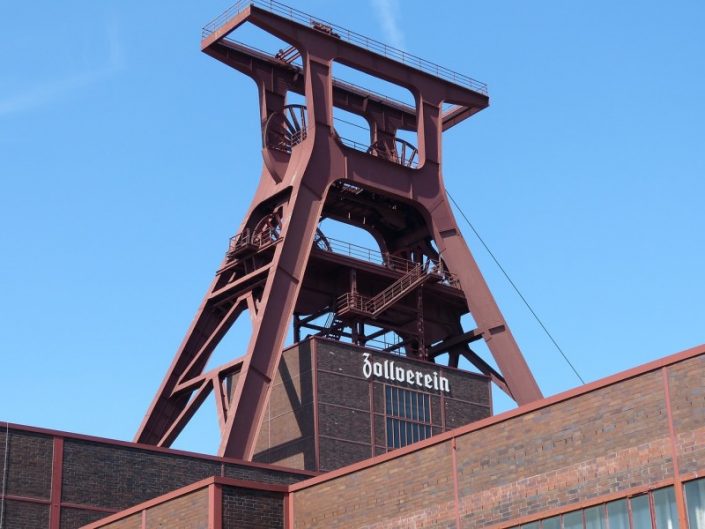
Industrial Heritage Full-Day Excursion from Cologne – Cathedral to Coal Mine North of Cologne lies the Ruhr, the coal and…
View tourA Roman city with a Gothic cathedral that took 632 years, twelve Romanesque churches nobody books, and a beer that arrives in glasses the size of a tumbler.
Why Cologne
Six hundred and thirty-two years
Begun 1248, abandoned 1473 with a crane left on the south tower, finished 1880 to the medieval plans. For four years afterwards the tallest building in the world.
The relics that paid for it
In 1164 the archbishop brought the relics of the Three Kings from Milan. The shrine built for them is the largest reliquary in the Western world, and the reason the cathedral is that size.
Twelve Romanesque churches
A ring of them survives inside the medieval walls and almost no itinerary includes one. St. Gereon’s ten-sided nave is the best-value hour in Cologne.
Koelsch has rules
A 0.2-litre Stange, a tally pencilled on the mat, and refills until you lay the mat over the glass. The brewhouses nearest the cathedral are the least representative ones.
Cologne stands on the Rhine in North Rhine-Westphalia, in the western corner of Germany, about 40 kilometres south of Duesseldorf and half an hour north of Bonn. It is the fourth-largest city in the country and by some distance the oldest of the large ones: the Romans raised it to the rank of colonia in AD 50 at the request of Agrippina the Younger, who had been born on the spot, and the name the city still uses is that Latin word worn down by nineteen centuries. The geography that matters to an itinerary is the connections. Frankfurt Airport is about an hour away by high-speed train, Brussels under two, Amsterdam under three, Cologne Bonn Airport twenty minutes from the centre — and almost every Rhine river cruise ties up within walking distance of the cathedral.
Building began in 1248, stopped in 1473 with the choir finished and a crane left standing on the south tower for nearly four hundred years, and was taken up again by the nineteenth century, which completed the work in 1880 to the surviving medieval plans. That is 632 years from first stone to last, and for four years afterwards it was the tallest building in the world at 157 metres. UNESCO listed it in 1996.
The reason for the scale sits behind the high altar. In 1164 the archbishop carried off from Milan what were held to be the relics of the Three Kings, and Cologne became a pilgrimage destination almost overnight. The shrine built to hold them is the largest reliquary in the Western world. Two practical notes: the nave is free and packed from mid-morning, so clients go in before nine or after five; and the south tower is 533 steps with no lift. The Gerhard Richter window of 2007 in the south transept, 11,500 squares of glass in 72 colours, is the thing guests photograph most and expect least.
Cologne was bombed harder than almost any German city and the old town was largely flattened; the cathedral stood, hit repeatedly, above the rubble. Clients expecting an intact medieval quarter around the Alter Markt should be told in advance that most of what they walk through is post-war reconstruction. What did survive, and what almost no itinerary includes, is the ring of twelve great Romanesque churches inside the line of the medieval walls: the ten-sided nave of St. Gereon, the trefoil choir of St. Maria im Kapitol, the tower of Groß St. Martin over the old town roofs.
Museum Ludwig, beside the cathedral, holds one of the largest Pop Art collections in Europe, a substantial Picasso group and a serious Russian avant-garde room. The Wallraf-Richartz Museum runs from the medieval Cologne School to the nineteenth century and is the quieter of the two. Kolumba, the archdiocesan museum built by Peter Zumthor over a bombed church and a Roman street, is an architectural visit in its own right. The Roman-Germanic Museum and its Dionysus mosaic have been through a long refurbishment with the collection split across a temporary home, so we confirm where an object actually is before it goes into a programme.
Koelsch may only be brewed in and around the city. It arrives in a 0.2-litre cylinder called a Stange, carried by a waiter called a Koebes who keeps replacing it and pencilling the tally on your beer mat until you lay the mat over the glass. Clients enjoy being told that in advance rather than discovering it with a fifth beer they did not order. Frueh, Paeffgen, Sion and the Malzmuehle are the houses people name. The honest caution is that the brewhouses closest to the cathedral are the busiest and the least representative; ten minutes on foot buys a completely different evening.
The season opens on 11 November at 11.11 in the morning, but the week that matters runs from Weiberfastnacht to Rosenmontag in February or March. The city genuinely stops: offices close, the parade takes hours to pass, hotels sell out a year ahead at several times the normal rate. Either a client has come for it, in which case the booking is made twelve months out, or they have not, in which case Cologne is the wrong city that week and we will say so before it is quoted. Advent is easier, with several markets across the centre and the large one below the cathedral. May, June and September are the pleasant months.
The cathedral is free to enter and stands directly beside the main station, which is why it fills from mid-morning and why the hour a group arrives decides what kind of visit it was. River-cruise calls make this worse rather than better: several ships can put their passengers on the same square within the same half hour.
We time the cathedral first or last in the day and put the Romanesque churches, Museum Ludwig or Kolumba into the middle, when the crowd is at its worst. The south tower is 533 steps and there is no lift — a detail better raised with the client than discovered at the turnstile.
From the programme
Cologne
Industrial Heritage Full-Day Excursion from Cologne – Cathedral to Coal Mine North of Cologne lies the Ruhr, the coal and…
View tour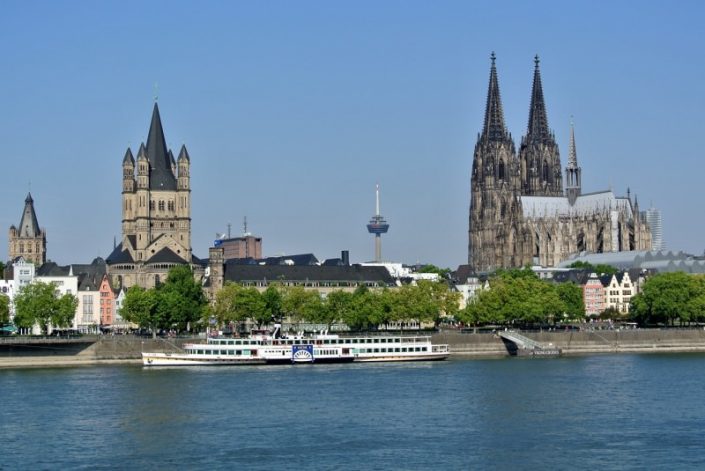
Cologne
Cruise on the River Rhine at Cologne – The City from the Water What would Cologne be without the Rhine?…
View tour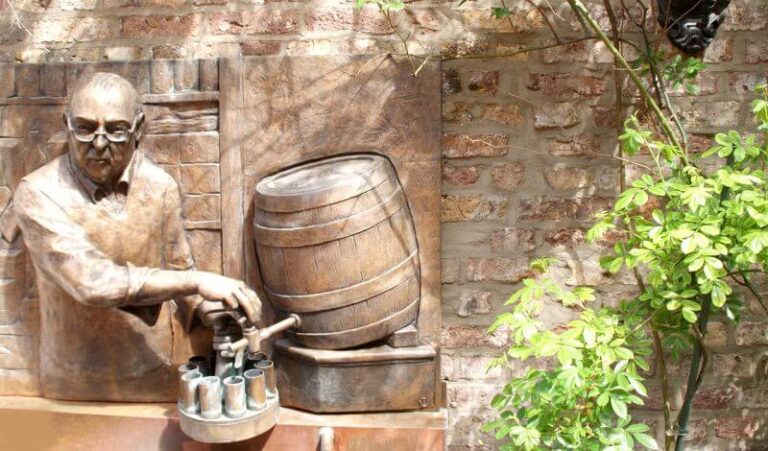
Cologne
Cologne Tours – Private Architecture, Chocolate and Brewery Programmes Cologne is not a city that gives itself up on a…
View tourQuestions clients ask
In the west, on the Rhine, in the state of North Rhine-Westphalia. It is about 40 kilometres south of Duesseldorf, half an hour north of Bonn, roughly an hour from Frankfurt Airport by high-speed train and under two hours from Brussels. Cologne Bonn Airport is twenty minutes from the centre, and the city is the fourth-largest in Germany.
A Roman colonia from AD 50, named after Agrippina the Younger, who was born here. A pilgrimage city from 1164, when the relics of the Three Kings arrived from Milan and the cathedral was begun to house them. A wealthy free imperial city in the Middle Ages, French and then Prussian after 1794, and very heavily bombed in the Second World War. Most of the old town is post-war reconstruction; the cathedral itself survived.
That the cathedral took 632 years and is free to walk into but crowded from mid-morning. That Koelsch may legally be brewed only in and around the city and comes in 0.2-litre glasses that keep being replaced until you stop them. That twelve Romanesque churches survive inside the medieval ring and almost nobody visits them. And that Carnival week is not a normal city break.
They are 40 kilometres apart and about half an hour by regional train, so it is physically easy and still usually wrong. They are different cities with different histories and a real rivalry, and one night split between them buys you two railway stations and two lunches. Two nights in one, with the other as a full day out, is the version that works.
Send the dates, the party and whether a ship is involved. We come back with a routing timed around the cathedral crowds and net rates.
Request net ratesAdvisor enquiries only · Virtuoso Preferred Supplier since 2013