
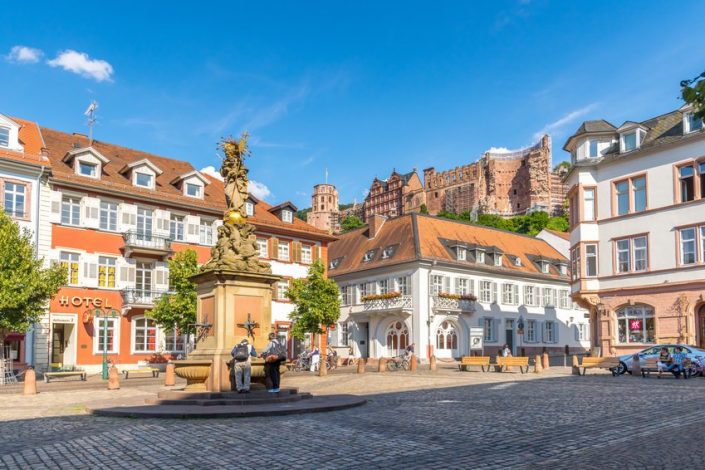
Heidelberg
Heidelberg Sip and Sail Tour
Heidelberg Sip and Sail – Private Two-Hour Neckar Boat Tour The view that made Heidelberg famous was painted from the…
View tourTwo of the greatest car collections in the world half an hour apart, vineyards inside the city limits, and a castle on an 855-metre cone an hour to the south.
Why Stuttgart
Two collections, two different visits
Mercedes-Benz at Untertuerkheim is around 160 vehicles walked downhill through a double helix and needs three hours. Porsche at Zuffenhausen is eighty cars on one floor and needs two.
Both close on Mondays
The single most common Stuttgart planning error. We check the opening calendar before the day is sold, not after the client has landed.
A castle on an 855-metre cone
Burg Hohenzollern is an hour south, the third castle on its summit, built between 1846 and 1867 as an idea of what a medieval castle ought to look like. The silhouette is why people come.
Vineyards inside the city
Several hundred flights of public steps, the Staeffele, climb through them. A broom over a door means a grower is serving his own wine for a few weeks — and that cannot be reserved like a restaurant.
Stuttgart is not a city clients arrive at for the skyline. It sits in a steep bowl in Baden-Wuerttemberg with working vineyards running down into the built-up area, which almost no other large European city can claim, and it has spent years with its main station as a construction site. What it has instead is specific: two of the greatest motor collections in the world within half an hour of one another, a first-rank art museum, and the Swabian Alb an hour to the south with Hohenzollern on top of it. Sold on those, Stuttgart is a strong two or three nights. Sold as a general city break, it will be compared with Munich and it will lose.
The Mercedes-Benz Museum at Untertuerkheim opened in 2006 in a double-helix building. Visitors ride a lift to the top and walk down through the whole history of the motor car, which begins here in 1886 and does not stop; there are around 160 vehicles on the way. It takes three hours from an interested client and two from a patient one.
The Porsche Museum at Zuffenhausen opened in 2009, is smaller and sharper, and covers a single marque on a single floating floor with roughly eighty cars on it. Two hours. The two sit on opposite sides of the city, both reachable on the S-Bahn and about forty minutes apart, and doing both properly is a full day with a late lunch in the middle. Both close on Mondays, which catches out more Stuttgart itineraries than anything else, and we check the calendar before the day is sold.
An hour south of Stuttgart a wooded cone rises to 855 metres out of the Swabian Alb with a castle covering the entire summit. It is the ancestral seat of the family that produced the kings of Prussia and the German emperors, and the building there now is the third on the site: a neo-Gothic reconstruction raised between 1846 and 1867 for Friedrich Wilhelm IV, an idea of what a medieval castle ought to look like rather than one that ever was. The silhouette from the valley road is why people come, and the treasury inside holds Prussian crown regalia.
By car it is about an hour from central Stuttgart towards Hechingen, and a private vehicle is what we recommend, because the last stage is the part that goes wrong. By train, Stuttgart to Hechingen takes roughly an hour and a quarter with a change, after which the client still needs a bus or a taxi to the foot of the hill. From the lower car park there is a shuttle to the gate, or a steep walk of twenty to thirty minutes.
Tickets are timed and the interior is seen on a guided tour, so the day is planned around a slot rather than around lunch. And the hill makes its own weather: on a wet afternoon guests may see very little from the ramparts, so we build the day to be worth the drive either way, usually with Tuebingen on the way back.
The Staatsgalerie is the reason art historians stop here: strong old masters and a serious twentieth-century collection, in an extension by James Stirling of 1984 that is itself a landmark of post-modern architecture. The Weißenhofsiedlung above the centre is the Werkbund estate of 1927 directed by Mies van der Rohe, and the two houses Le Corbusier built there are UNESCO World Heritage; one of them is now the museum. Ludwigsburg, fifteen kilometres north, is one of the largest baroque palaces in Germany and fills a half day.
Stuttgart is one of the largest wine-growing communes in Germany and the vineyards are inside the city, reached by several hundred flights of public steps known as Staeffele. In the wine villages a Besenwirtschaft — a grower licensed to serve his own wine and a short menu for a few weeks of the year, marked by a broom over the door — is the most Swabian evening available, and cannot be reserved the way a restaurant can. We find one that is actually open rather than promising one by name. Maultaschen, Spaetzle and Zwiebelrostbraten are the dishes to ask for.
The Cannstatter Volksfest in late September is the second-largest beer festival in Germany and moves the hotel market for a fortnight; the spring Fruehlingsfest does the same on a smaller scale, as do the trade fairs at the Messe. May, June and September are the good months.
Tickets for Burg Hohenzollern are timed and the interior is seen on a guided tour, so the drive, the lunch and the walk up all arrange themselves around one fixed hour. That is the opposite of how most castle days get quoted, and it is the reason we ask for the date before we price it.
The hill makes its own weather. The photograph everyone has seen — the castle floating on a sea of fog — is an autumn-morning inversion, not a normal morning, and on a wet afternoon guests may see very little from the ramparts. We build the day to be worth the drive either way, usually with Tuebingen on the return.
From the programme
Heidelberg
Heidelberg Sip and Sail – Private Two-Hour Neckar Boat Tour The view that made Heidelberg famous was painted from the…
View tour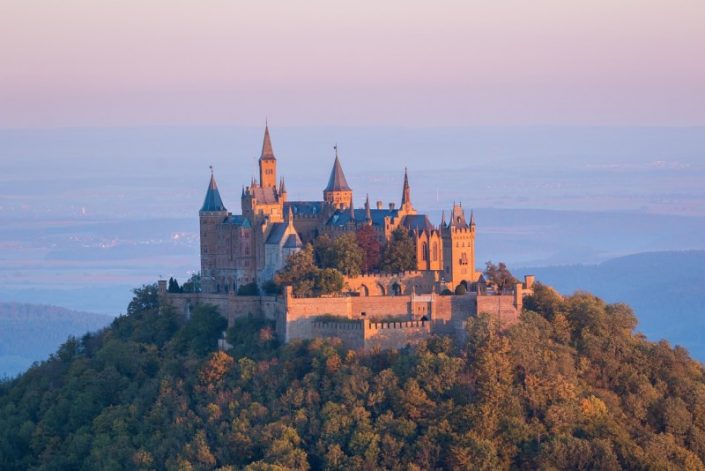
South West Germany
Private Day Excursion from Stuttgart to Hohenzollern Castle Hohenzollern Castle stands alone on a conical hill above Hechingen, roughly eighty…
View tour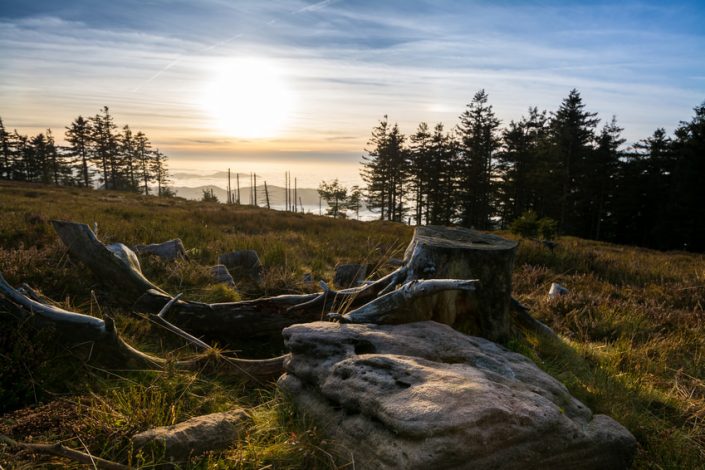
South West Germany
Private Black Forest Excursion from Baden-Baden or Freiburg The Black Forest is a region rather than a sight, which is…
View tourPractical
By car it is about an hour towards Hechingen, and for any party that is what we recommend. By public transport it is roughly an hour and a quarter to Hechingen with a change, then a bus or taxi to the foot of the hill, then either a shuttle bus to the gate or a steep twenty to thirty minute walk. Tickets are timed and the interior is seen only on a guided tour, so the day is built around the slot.
Two: the Mercedes-Benz Museum at Untertuerkheim, around 160 vehicles and three hours, and the Porsche Museum at Zuffenhausen, around eighty cars and two hours. They sit on opposite sides of the city, about forty minutes apart. Both in one day is possible with a late lunch in between and makes a long day. Both close on Mondays.
The Staatsgalerie, in the James Stirling building of 1984, for old masters and the twentieth century. The Weißenhofsiedlung of 1927, where two Le Corbusier houses are UNESCO World Heritage. The Wilhelma, a zoo and botanical garden inside a Moorish palace complex. The Staeffele up through the city vineyards, and an evening in a Besenwirtschaft. Ludwigsburg Palace, fifteen kilometres north, takes the remaining half day.
Two nights carries the city and one of the two big outings — the museums or the castle. Three carries both comfortably. It pairs westwards with the Black Forest, an hour away, and southwards with Tuebingen and the Swabian Alb; Munich is a little over two hours by train if the trip continues east.
Send the dates and which of the two the client actually came for. We check the opening days, hold the timed slot and come back with net rates.
Request net ratesAdvisor enquiries only · Virtuoso Preferred Supplier since 2013