
Dresden
Dresden – Private Christmas Market Walking Tour 2 hrs
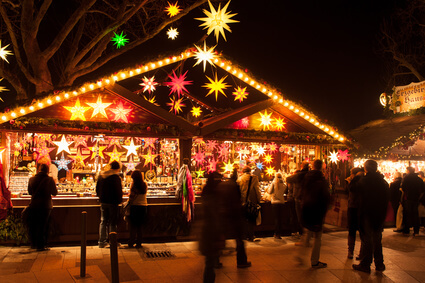
Dresden Private Christmas Market Walking Tour – Two Hours at the Striezelmarkt Dresden’s Striezelmarkt, first recorded in 1434, is one…
View tourA baroque centre rebuilt from its own rubble, two hours from Berlin and a little over two from Prague. The Green Vault is the ticket that cannot be improvised.
Why Dresden
The dark stones are the original ones
The Frauenkirche was rebuilt between 1994 and 2005 from identified fragments. The dark blocks in the pale facade are the ones that came out of the rubble. Tell clients — it is the whole point.
The Green Vault caps its numbers
Timed entry at a fixed minute, a dust lock at the door and a hard cap inside. We hold the slot before the day is built, or we route the client to the New Green Vault upstairs instead.
The opera tour depends on rehearsals
Semperoper house tours run when the stage is free, and that schedule is published only a few weeks out. The exterior can be promised on any date; the interior cannot.
Two hours from Berlin, two from Prague
Dresden is the obvious stop between the two and almost nobody sells it. Two nights hold the city and one excursion — Meissen, Moritzburg or the Bastei.
Dresden was the residence of the Electors of Saxony, and almost everything clients photograph comes from one reign: Augustus the Strong, Elector from 1694 and King of Poland alongside it, who spent Saxony’s silver on buildings, paintings and porcelain. What clients are looking at, however, is largely not the original stone. The raid of 13 February 1945 flattened the centre, the ruins stood through forty years of the GDR, and the reconstruction ran from the 1950s to well past 2000.
Say that plainly to a client and it improves the visit rather than spoiling it. The Frauenkirche was rebuilt between 1994 and 2005 using every original stone that could be identified and placed, and those stones are the dark ones set into a pale facade — a building that documents its own destruction on the outside. It is a better story than an untouched old town, and it has the advantage of being true.
Everything a first visit needs sits inside a ten-minute walk. The Zwinger is the baroque pleasure courtyard, built in the 1710s and 1720s, and it holds the Old Masters Picture Gallery with Raphael’s Sistine Madonna and a Vermeer, alongside the porcelain collection and the cabinet of eighteenth-century scientific instruments. The Semperoper faces it across the Theaterplatz: burned once in the nineteenth century, bombed once in 1945, and reopened in 1985, forty years to the day after the raid.
The Residenzschloss holds the treasury collections. Along its northern side the Fuerstenzug runs about a hundred metres down the Augustusstraße — the procession of Saxon rulers rendered in some twenty-three thousand Meissen tiles, which came through the raid essentially intact. The Frauenkirche closes the eastern end of the walk, with the Bruehlsche Terrasse above the river beside it.
The Historic Green Vault is the reason many clients come and the hardest thing in the city to arrange. Entry is by timed ticket at a fixed minute, numbers inside are capped, and visitors pass through a dust lock on the way in. Tickets go on sale well ahead and the useful slots go first, so we hold one before anything else in the day is designed. The New Green Vault upstairs is a conventional museum with no such limits and is often the sensible substitute.
Semperoper house tours are the other trap. They run when the stage is free, which depends on the rehearsal and performance schedule and is published only a few weeks out. We can promise the building from the Theaterplatz on any date; we can promise the inside only once the schedule exists. Performance tickets are a separate matter and go months ahead.
Clients often assume the whole city looks like the Theaterplatz. It does not, and the parts that do not are worth an hour. Across the Augustus Bridge the Neustadt came through the raid better and keeps the baroque quarter around the Koenigstraße, with the Kunsthofpassage courtyards further out. The Elbe meadows below the terrace are open parkland running right through the middle of Dresden, and a fleet of nineteenth-century paddle steamers still works the river upstream towards Pillnitz.
Meissen is half an hour downstream: the manufactory that produced the first hard-paste porcelain in Europe from 1710, with the Albrechtsburg on the rock above it. Saxon Switzerland is forty minutes upstream, where the Elbe cuts through sandstone towers and the Bastei bridge crosses a gorge high above the river; it is a walk rather than a viewpoint you drive up to, and clients should be told so before the day is sold. Moritzburg, twenty minutes north, is a baroque hunting lodge standing in its own lake, and in winter it houses the Cinderella exhibition half of central Europe grew up with.
The Striezelmarkt on the Altmarkt was first recorded in 1434 and is among the oldest Christmas markets in Germany. It is not the only one here: the Stallhof market in the castle courtyard is the medieval one, with further markets at the Frauenkirche and in the Neustadt, which means Dresden carries a full Advent day rather than an hour of it. The Stollenfest, with an enormous stollen paraded through the streets, falls on the Saturday before the second Sunday in Advent, and the city is full that weekend.
Otherwise Dresden sits about two hours from Berlin and a little over two from Prague, which makes it the natural stop on a route almost nobody sells. Two nights holds the city and one excursion comfortably. For Advent, book the hotel in summer.
From the programme
Dresden
Dresden Private Christmas Market Walking Tour – Two Hours at the Striezelmarkt Dresden’s Striezelmarkt, first recorded in 1434, is one…
View tour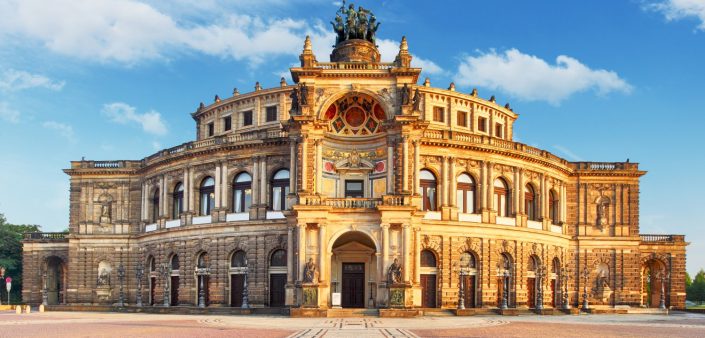
Dresden
Discover Dresden – Private Walking Tour of the Baroque Old Town Dresden is a city that has been argued over…
View tour
Dresden
Eastern German Highlights – Five-Day Private Tour of Dresden, Leipzig and Berlin Three cities, five days, one arc. Dresden supplies…
View tourQuestions clients ask
The Striezelmarkt on the Altmarkt runs through Advent until Christmas Eve and was first recorded in 1434, which makes it one of the oldest in Germany. It is not the only one: the Stallhof market in the castle courtyard is the medieval one, and there are further markets at the Frauenkirche and in the Neustadt. That combination is why Dresden holds a full Advent day. The Stollenfest weekend, before the second Sunday in Advent, is the busiest of the season.
Because the buildings were put back. The centre was flattened on 13 February 1945 and the reconstruction ran from the 1950s until well after 2000, with the Frauenkirche finished in 2005. The Zwinger, the Semperoper and the Residenzschloss are rebuilt on their own foundations to the original designs. The Fuerstenzug, the porcelain mural on the Augustusstraße, is one of the few things that survived the raid intact.
By a timed ticket at a fixed minute, with capped numbers and a dust lock at the entrance. Tickets are released well ahead and the useful slots go first, so we hold one before the rest of the day is designed. If none is available, the New Green Vault upstairs has no such limits and is a real alternative rather than a consolation.
It can, at about two hours each way from Berlin and a little over two from Prague, and we run it that way when the itinerary leaves no choice. It is better as an overnight: the Altstadt in the late afternoon, when the coaches have gone and the light is on the sandstone, is the part clients remember, and it is exactly the part a day trip cuts.
Tell us the dates and whether the Green Vault is a must. We hold the timed slot first and build the two days around it.
Request net ratesAdvisor enquiries only · Virtuoso Preferred Supplier since 2013