
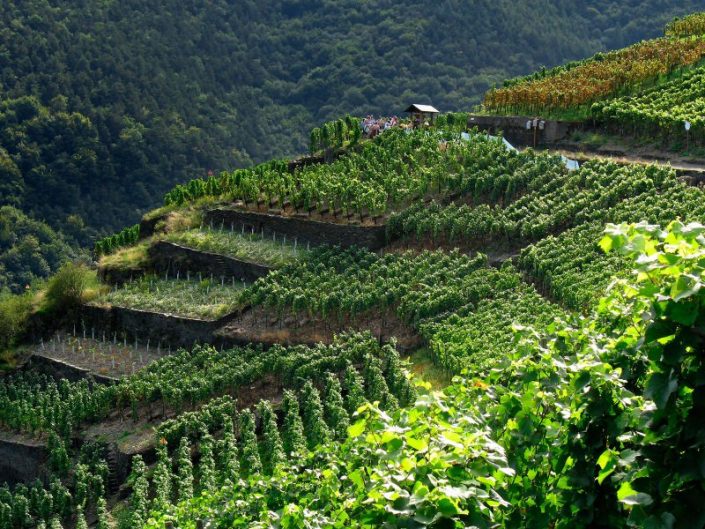
Frankfurt
Frankfurt – Best German Winegrowing Estates around Frankfurt
Best German Winegrowing Estates around Frankfurt – A Private Rheingau Day Tour Forty minutes west of Frankfurt the Rhine turns…
View tourA forest the size of a small country, with spa towns, three-star kitchens and the clockmaking valleys in between. Two hours from Frankfurt, one from Stuttgart.
Why the Black Forest
Three Michelin stars, twice
Baiersbronn, a village of 15,000, holds two three-star houses. A concentration matched almost nowhere in Europe — and almost no visitor knows it.
Craft you can watch
Carvers and clockmakers who receive a small party in the workshop and keep working while they explain. Booked a fortnight ahead, never dropped in on.
Spa with a century behind it
Baden-Baden was the summer capital of nineteenth-century Europe. The Kurhaus, the Lichtentaler Allee and two thermal baths that could not be less alike.
Warm-slope wine
Baden is Germany’s warmest wine region. The Kaiserstuhl and Ortenau growers receive small parties properly when they are asked in advance.
The Black Forest is not a single place, and this is the first thing to settle with a client. It runs about 160 kilometres north to south along the Rhine valley and is 60 kilometres across at its widest — larger than several German federal states. The north around Baden-Baden is spa country: broad valleys, grand hotels, a casino Dostoyevsky lost money in. The centre is the one people picture, with the deep-cut valleys, the farmhouses under enormous hipped roofs, and the clockmaking towns. The south towards the Swiss border is higher, emptier and more Alpine in feel, with the Feldberg at 1,493 metres and long views to the Alps on a clear winter day.
A client who says they want to see the Black Forest usually means the centre, arrives with two nights, and is disappointed if the days are spent driving. We build it the other way round: one base, and the region brought to the client.
Baden-Baden is the entry point for most first visits and the easiest sell. The Romans bathed here, the nineteenth century turned it into the summer capital of Europe, and enough of that survives to be worth a day: the Kurhaus and its casino, the Trinkhalle colonnade, the Lichtentaler Allee along the river, and two thermal baths that could not be less alike. Friedrichsbad is a nineteenth-century Roman-Irish bath, textile-free and strictly sequenced, which delights some guests and horrifies others — we ask before we book. Caracalla next door is swimwear, modern and family-suitable.
The Festspielhaus is Germany’s largest opera and concert house and programmes at a level that surprises people who expect a spa town. For clients travelling for music, we check the schedule before the dates are fixed rather than after.
Clockmaking here began as winter work for farming families and turned into an industry that supplied the world. The German Clock Museum in Furtwangen holds the serious collection and is better than its modest name suggests. Triberg has the waterfalls, Germany’s highest at 163 metres, and the tourism that comes with them; we go early or late. Schonach holds the largest cuckoo clocks, which are more charming than they sound.
What lands hardest with clients is a working craftsman rather than a museum case. There are still carvers and clockmakers who will receive a small party in the workshop and explain what they are doing while they do it. That is a booking, not a drop-in, and it needs a fortnight.
The Black Forest has the densest concentration of Michelin stars in Germany, and most visitors have no idea. Baiersbronn alone, a village of 15,000 people in a side valley, holds two three-star houses — Schwarzwaldstube at the Traube Tonbach and Restaurant Bareiss — which is a concentration matched almost nowhere in Europe. Tables go months ahead and the kitchens close for weeks at a time; we hold rather than hope.
Below that level the region eats extremely well and much more simply: Vesperstuben serving cold platters, trout from the valley streams, and the Baden wine villages of the Kaiserstuhl and the Ortenau on the warm western slope. Baden is Germany’s warmest wine region and the growers receive small parties properly when they are asked in advance.
The region rewards a car and a driver who knows the valleys. The Schwarzwaldhochstrasse runs 60 kilometres along the ridge from Baden-Baden towards Freudenstadt with the views the drive is famous for. The Deutsche Uhrenstrasse loops through the clockmaking towns. The Badische Weinstrasse follows the vineyards along the western edge. None of them is a motorway and none of them should be rushed.
Trains reach the edges — Freiburg, Offenburg, Baden-Baden — but not the valleys. For a party of any size a private vehicle is not a luxury here, it is the only way the day works.
Two bases cover most itineraries. Baden-Baden in the north, for spa, culture and easy arrival from Frankfurt. Baiersbronn or the Kinzig valley in the centre, for the forest itself, the kitchens and the craft workshops. Freiburg in the south suits clients combining the Black Forest with Alsace or Switzerland; it is a university city with a cathedral tower Jacob Burckhardt called the finest in Christendom, and a genuinely pleasant place to spend an evening.
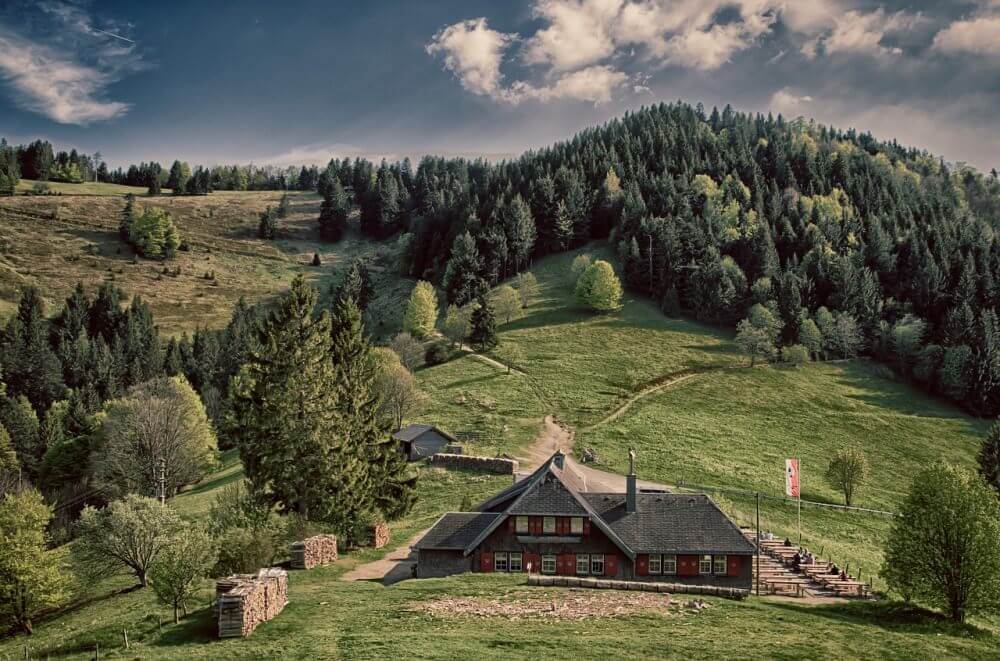
The Schwarzwaldhochstrasse runs 60 kilometres along the ridge from Baden-Baden towards Freudenstadt. It is the drive the region is known for, and the reason a private vehicle here is not a luxury but the thing that makes the day work at all.
Trains reach Freiburg, Offenburg and Baden-Baden. They do not reach the valleys.
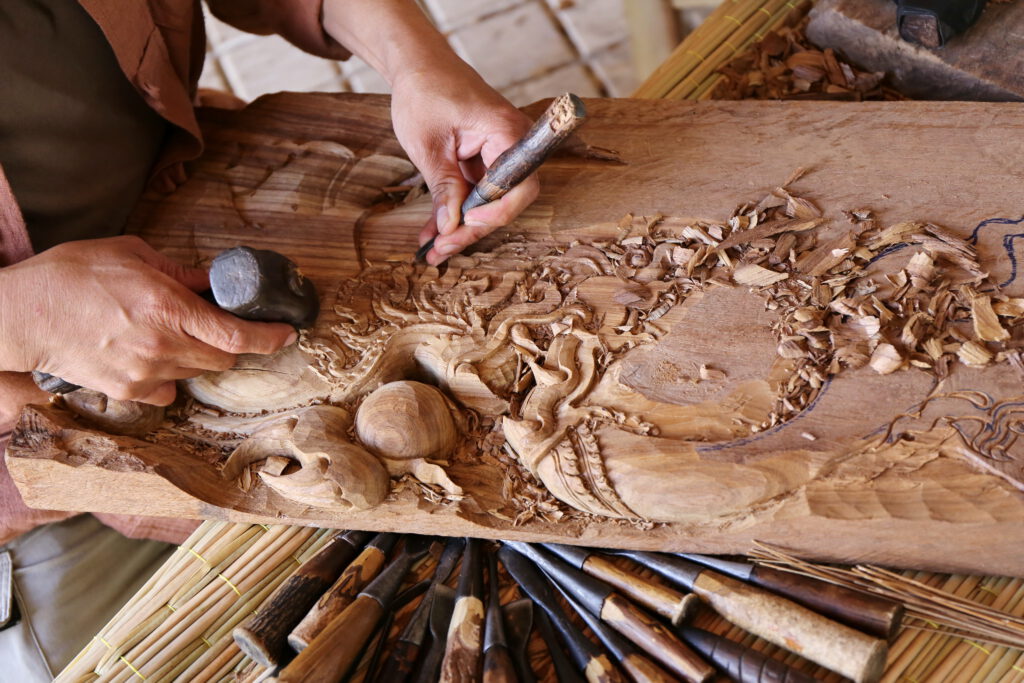
Clockmaking began here as winter work for farming families and became an industry that supplied the world. The German Clock Museum in Furtwangen holds the serious collection.
What lands hardest with clients is a working carver who explains while he works. That is a booking with a fortnight of notice, not a stop on a route.
From the programme
Frankfurt
Best German Winegrowing Estates around Frankfurt – A Private Rheingau Day Tour Forty minutes west of Frankfurt the Rhine turns…
View tour
Heidelberg
Best of South West Germany – Seven Days of Nature and Myths The south-western corner of Germany is where the…
View tour
South West Germany
Private Black Forest Excursion from Baden-Baden or Freiburg The Black Forest is a region rather than a sight, which is…
View tourPractical
Two nights is the working minimum and buys one base with the region brought to the client. Three or four lets you split north and centre, or add Alsace and the Rhine. One night means a drive with a lunch in it, and we say so before it is sold.
Late May into early July for the long light and the meadows, September and October for the wine harvest on the western slope and the clearest views. August is busy on the through-roads. Winter is genuinely quiet and the high road can be spectacular, but the three-star kitchens close for weeks at a time and the passes need checking.
Both, and the mix is the point. The valleys need a car; the ridge trails, the Baden-Baden allee and the wine villages are walked. We match the balance to how far the party actually wants to go, which is usually less than the itinerary assumes.
Easily, and it often should. Strasbourg and Colmar are under an hour from the western edge, Basel and Zurich under two from the south. Freiburg is the natural base for a programme that crosses a border.
Send the dates, the party and where they are arriving from. We come back with a routing, held tables and net rates.
Request net ratesAdvisor enquiries only · Virtuoso Preferred Supplier since 2013