
Bavaria & Southern Germany
Nuremberg – Private Walking Tour
Nuremberg Private Walking Tour Through the Imperial Old Town Few German cities carry as much history per square metre as…
View tourA city carrying two histories at once — the Kaiserburg and Duerer on one side, the rally grounds and Courtroom 600 on the other. An hour from Munich by fast train.
Why Nuremberg
Two histories, one square kilometre
Emperors and Duerer on one side, the rally grounds and Courtroom 600 on the other. No other German city asks a visitor to hold both in a single day.
A courtroom that still sits
Courtroom 600 is a working court. When it is in session the room is closed and only the exhibition above can be seen. We check the calendar first.
Rebuilt, and honest about it
The old town was destroyed in January 1945 and rebuilt to the medieval plan. A guide who says so in the first ten minutes earns the rest of the day.
An hour from Munich
Fast train from Munich, two hours from Frankfurt, ninety minutes by road from Rothenburg. It pairs with either without adding a travel day.
Nuremberg is in Germany, in the north of Bavaria, in the region called Franconia — which Franconians will tell you is not quite the same thing as Bavaria, and they are half right. It is the second city of the state, an hour from Munich by fast train, two from Frankfurt and ninety minutes by road from Rothenburg ob der Tauber — and the city advisors most often leave out of a southern Germany itinerary, on the assumption that it is a stop rather than a stay.
That is a mistake, for one reason. No other German city carries two histories of this weight inside the same square kilometre. The imperial city of the Holy Roman Empire, Albrecht Duerer and the first German railway on one side; the party rally grounds, the race laws that took the city’s name and the courtroom of the war crimes trials on the other. Neither can be quietly skipped, and the day has to be built so that one does not flatten the other.
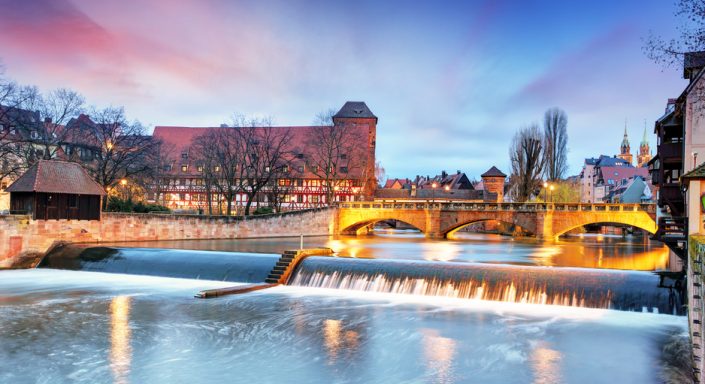
The Kaiserburg stands on the sandstone ridge above the old town, and every Holy Roman Emperor between the eleventh century and the sixteenth was expected to hold court here at least once. Below it the old town is still walled — some four kilometres survive, with towers, a dry moat and the gates — and inside are the house where Duerer lived for the last twenty years of his life, the Gothic churches of St. Sebald and St. Lorenz, and the Schoener Brunnen on the market square. The Germanisches Nationalmuseum holds the largest collection of German cultural history anywhere and repays two hours on its own.
One thing to tell a client before they arrive: the old town was almost entirely destroyed in the air raids of January 1945. What they walk through was rebuilt to the medieval plan over the decades that followed, carefully and at great expense. It is not a stage set and it is not untouched either, and a guide who says that in the first ten minutes has earned the rest of the day.
The former rally grounds lie about four kilometres south-east of the old town, around the Dutzendteich lake. Scale is the whole point and it does not photograph: the unfinished Congress Hall, the Zeppelin field with its grandstand, and the parade road running two kilometres through the middle. The documentation centre inside the Congress Hall is where a visit should start. Parts of the site have been under structural work for years, so we confirm what is open before a day is sold.
Courtroom 600 sits in the Palace of Justice, two kilometres west of the old town, and is where the trials of 1945 and 1946 were held. It is still a working courtroom. When the court is sitting, the room itself is closed and only the exhibition above it can be seen — exactly the sort of detail that ruins a carefully sold morning if nobody checked.
It can be done, and it needs discipline rather than optimism. The old town on foot is two and a half to three hours at a pace clients enjoy. The rally grounds take about two hours including the driving. Courtroom 600 takes an hour. With a car between the three that is a full day, and it works in that order: the imperial city first, the twentieth century after, and no attempt to finish on something cheerful.
Two nights is better, and Nuremberg has the hotels for it. Where a client has only half a day we ask which of the two histories they came for and build that half properly. Guiding here is licensed by the city, as in Munich, Berlin and Dresden, and the guides who handle the rally grounds well are a small group, booked early.
The Christkindlesmarkt on the Hauptmarkt opens on the Friday before Advent and is the market against which every other German one is measured. It is also a day-trip target from Munich, so it is at its worst between four and seven in the evening and the hotel rates rise accordingly. Midweek, and before the offices empty, is the version worth selling.
The food is Franconian and specific. Nuremberg bratwurst are finger-sized and eaten three at a time in a roll, Lebkuchen here is a protected designation with roots in the medieval spice trade, and the beer is Franconian rather than Bavarian — a distinction the locals will happily explain at length.
The site is four kilometres south-east of the old town and spread around a lake: the unfinished Congress Hall, the Zeppelin field, and a parade road two kilometres long. Walking between them is not realistic, and scale is the entire point.
We run the imperial city first and the twentieth century after, never the reverse. Parts of the site have been under structural work for years, so we confirm what is open before the day is sold.
From the programme
Bavaria & Southern Germany
Nuremberg Private Walking Tour Through the Imperial Old Town Few German cities carry as much history per square metre as…
View tour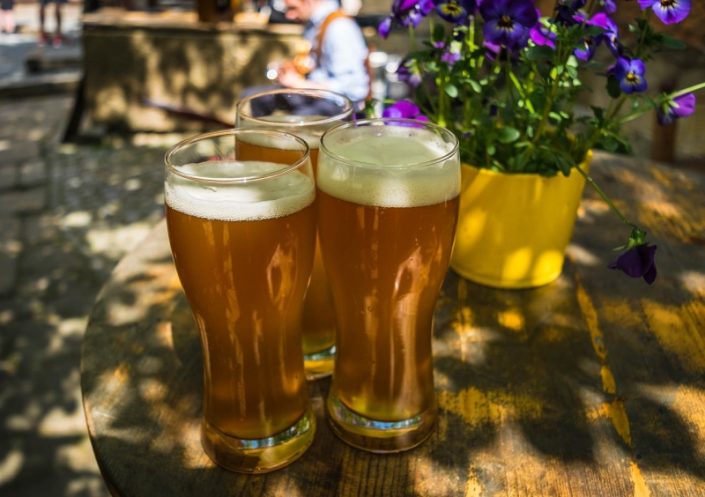
Bavaria & Southern Germany
Nuremberg Beer Brewing Course – A Private Eight-Hour Brew Day Franconia has a denser concentration of breweries than anywhere else…
View tour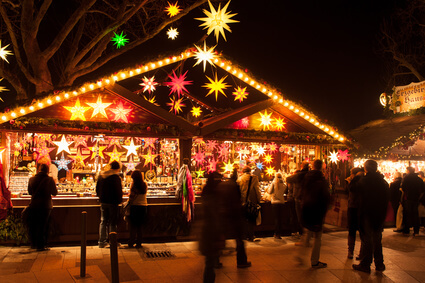
Bavaria & Southern Germany
Private Nuremberg Christmas Market Walking Tour – Two Hours The Christkindlesmarkt on the Hauptmarkt is the market every other German…
View tourQuestions clients ask
Germany. It lies in the north of the federal state of Bavaria, in the region called Franconia, about 170 kilometres north of Munich and 220 south-east of Frankfurt. The German spelling is Nuernberg, which is why clients sometimes think they have found a different city.
That it carries two histories at full strength in the same small centre. It was the unofficial capital of the Holy Roman Empire and the city of Duerer; it was also chosen for the party rallies and then for the trials that followed. Most cities offer one story. Here the day has to be built so that neither one flattens the other.
Yes, and it is the most efficient triangle in southern Germany. Munich to Nuremberg is an hour by fast train or under two by road; Nuremberg to Rothenburg is ninety minutes by car, and the train needs two changes onto a branch line. We run it as Munich, then Nuremberg with a night, then Rothenburg with a night, and on towards Frankfurt or Wuerzburg.
One full day covers the old town, the rally grounds and Courtroom 600 with a car between them, and it is a full day rather than a comfortable one. Two nights lets the two halves breathe and adds the Germanisches Nationalmuseum. Half a day means choosing one of the two histories, and we say so before it is sold.
Send the dates, the party and which of the two histories they came for. We come back with a routing, confirmed openings and net rates.
Request net ratesAdvisor enquiries only · Virtuoso Preferred Supplier since 2013