
Private Sylt Travel: Germany’s North Sea Island
Forty kilometres of sand, thatched Frisian houses, two Michelin stars and a nature reserve over two thirds of the island. Reached by causeway train, not by road.
Why Sylt
Four things to tell a client
No road to the island
Sylt is reached by a 1927 railway causeway. Cars cross on a car-carrying train from Niebuell in about 35 minutes, or clients fly in seasonally.
Forty kilometres of sand
One continuous beach down the whole west coast. On the east side, mudflats and salt marsh. At its narrowest the island is under 400 metres across.
A UNESCO World Heritage sea
Two thirds of Sylt is protected and the Wadden Sea is World Heritage. A guided walk on the mudflats at low tide is the most memorable thing here — and needs a licensed guide, not a map.
Two stars and the only oysters
Soel’ring Hof at Rantum holds two Michelin stars. The oyster beds at List are the only ones in Germany.
Why Germans know Sylt and almost no one else does
Sylt sits in the North Sea off the Danish border and has been the German summer address for 150 years. It is not a discovery and it is not undiscovered — it is simply not on the itineraries international advisors are usually given, which is the opportunity. Clients who have done Bavaria and the Rhine and want a fourth or fifth Germany trip find something here that looks nothing like the rest of the country.
The shape is the first thing to explain. The island is 38 kilometres long and, at its narrowest, under 400 metres across, so you can stand with the open North Sea on one side and the Wadden Sea on the other. The west coast is one continuous sand beach for forty kilometres. The east side is mudflats, salt marsh and bird colonies. More than two thirds of the island is protected, and the Wadden Sea is a UNESCO World Heritage site.
Getting there is part of the story
There is no road to Sylt. The island is reached by the Hindenburgdamm, a railway causeway built in 1927, and cars cross on a car-carrying train from Niebuell that takes about 35 minutes. It runs frequently, it books out in summer and at Christmas, and the queue on a bad Saturday is genuinely long. For most clients we put the car on the train and meet them on the island, or fly them in: Sylt Airport takes seasonal direct flights from several German cities and Zurich.
On the island itself the distances are short and a car is useful rather than essential. There is one main road down the spine, a good bus network, and cycling is the way most of the island actually moves.
Where clients should stay
Westerland is the main town and the transport hub: shops, the promenade, the largest hotels and most of the nightlife. It suits clients who want things within walking distance and do not mind being where everyone else is.
Kampen is the address. Thatched roofs, the Rotes Kliff above the beach, the boutiques on the Stroenwai known locally as the Whisky Mile, and the highest room rates on the island. Clients who have been told about Sylt have usually been told about Kampen.
Keitum is the counter-argument, and often the better one: the old captains’ village on the calm Wadden side, with lime trees, the twelfth-century church of St. Severin and a pace nothing like the west coast. List in the far north is the northernmost point in Germany, wilder and quieter, and Hoernum in the south sits on the harbour where the boats leave for the seal banks and the neighbouring islands.
What clients actually do
The beach is the reason most people come, and the Strandkorb — the hooded wicker beach chair — is rented by the day and taken more seriously than visitors expect. Beyond that, the island rewards guests who move around it. A guided walk on the Wadden Sea mudflats at low tide is the single most memorable thing on Sylt and needs a licensed guide, not a map; the tide comes back faster than people believe. The Ellenbogen peninsula in the north is a private road with a toll and the emptiest sand on the island. The Uwe Duene is the highest point at 52 metres and rewards the wooden staircase with a view of both coasts at once.
For dining, Soel’ring Hof at Rantum holds two Michelin stars and books far ahead. Below that, the island eats extremely well on fish: the smokehouses, the harbour restaurants at Hoernum and List, and the oyster beds at List, which are the only ones in Germany.
Season, and being honest about it
July and August are hot tickets and hotels are booked six to nine months ahead at rates that surprise people. May, June and September are the good months: warm enough, long light, and the island still breathing. October brings storms, which some clients specifically want — the North Sea in a gale is a spectacle and the hotels are half empty. Christmas and New Year book out almost as hard as August.
The honest caution: Sylt is a weather island. A grey week is a real possibility even in June, and a programme that depends entirely on the beach will disappoint. We build days that work in either case, with the mudflat walk, the museums at Keitum, the smokehouses and the spa capacity of the larger hotels as the wet-weather half of the plan.
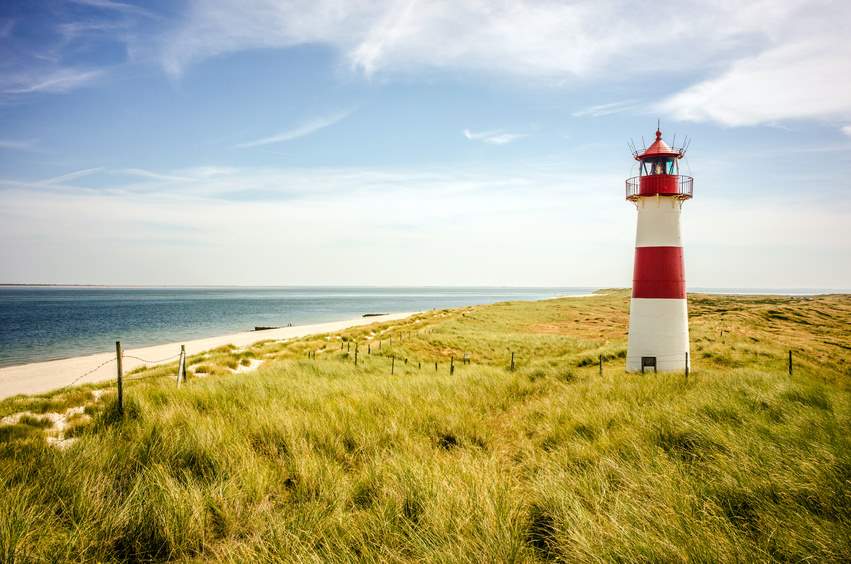
Kampen, Keitum or Westerland
Kampen is the address clients have heard of: thatched roofs, the Rotes Kliff, the Whisky Mile and the highest rates on the island. Westerland is the town and the transport hub, and suits guests who want everything walkable.
Keitum is the counter-argument and often the better one — the old captains’ village on the calm Wadden side, lime trees, a twelfth-century church, and a pace nothing like the west coast.
Practical
Timing, weather and booking ahead
How far ahead does Sylt need to be booked?
July, August, Christmas and New Year run six to nine months ahead, and the car train sells out alongside the hotels. May, June and September can often be held at eight to twelve weeks. Send us the travel window before you quote and we will tell you what is realistic.
What happens if the weather is bad?
It is a North Sea island and a grey week is possible even in June. We build every programme with a wet-weather half: the mudflat walk still runs, the Keitum museums, the smokehouses, and the spa capacity of the larger hotels. A plan that depends entirely on the beach will disappoint.
Do clients need a car on the island?
Useful, not essential. There is one road down the spine, a good bus network, and cycling is how the island actually moves. Getting the car there is the harder part, not using it once it is there.
Can Sylt combine with Hamburg?
Yes, and it usually should. Hamburg is about three hours by direct train to Westerland, which makes a natural two-centre trip: the city first, the island after. We run the Hamburg half as well.
Hold something on Sylt
Send the travel window and the party. We come back with what is still available, including the car train, and net rates.
Check availability